2027 Hyundai Tucson Goes Bigger And Boxier With Up To 288 HP
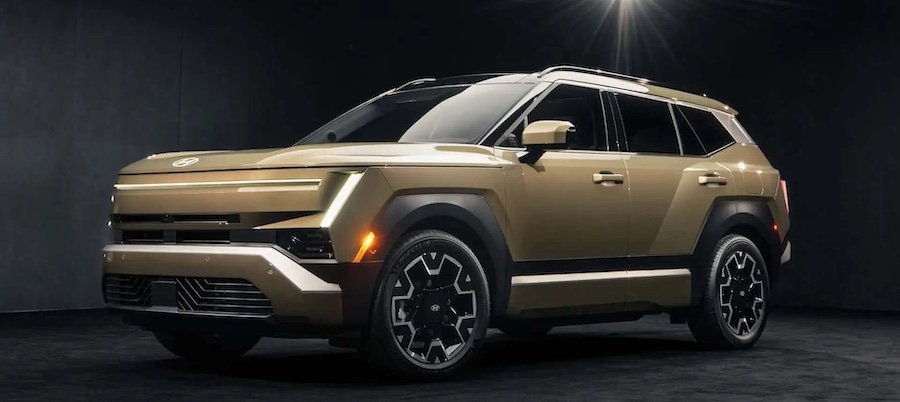
Update: Following the global debut of the 2027 Tucson in Korea in August, Hyundai has officially unveiled the new Tucson for the US. This story has been updated with official powertrain figures, technology updates, and additional details.
Hyundai has developed a habit of completely changing a model's design when it moves to the next generation. The Elantra, the Palisade, the Kona, and so on. The latest Tucson is no exception.
Looking as if it was designed with a ruler for a Robocop reboot, the compact crossover is chock-full of edges. It embraces a boxy look, giving it a more rugged appearance, even though we all know it’s highly unlikely ever to leave the asphalt.
The New Hyundai Tucson Is Bigger And Sharper
When prototypes were spotted wearing camouflage, the cloaked test vehicles seemed bigger than the outgoing generation. Hyundai is confirming our impression of an enlarged body today, saying it has stretched the body by 2.3 inches, to a total of 185.0 inches. Half of that growth spurt has gone into the wheelbase, which now sits at 109.6 inches.
The next-gen Tucson is also 1.57 inches wider, at 75.0 inches total, freeing up even more room inside the cabin. You can easily tell it’s a bigger vehicle by the more generous quarter glass, and it’s also much easier to hop inside as the opening angle of the rear doors has increased by 10 degrees to 83 degrees.
Standing 66.3 inches tall, the revamped Tucson is 0.8 inches taller than its predecessor, providing 1.1 inches more rear-seat headroom than the outgoing model. Hyundai’s bold redesign adds an illuminated H motif to both ends, making the headlights and taillights look interchangeable.
Hyundai is also giving buyers four new colors to choose from, all "nature-inspired." There's a Ranger Green in both pearl and matte, as well as a Driftwood Gray and Red Rock Orange, both with either finish. Kodiak Blue comes exclusively with a pearl finish.
As expected, Hyundai also kept the XRT trim around, complete with a handful of rugged add-ons.
More Screens And More Buttons
Since we keep mentioning the interior, it’s obvious that Hyundai has fully redesigned the cabin to accommodate its new Pleos infotainment system. That consists of a standard 12.9-inch central display, or the option of a massive 17.0-inch display. There's also a 9.9-inch slim display for the digital cluster.
Thankfully, there’s still a row of physical controls underneath the giant display. So that's good.
Although we’re living in the cost-cutting era, Hyundai thankfully didn’t ditch the driver’s instrument cluster. The slim display is positioned atop the dashboard, directly in the driver's line of sight, mimicking the setups in the two other models we mentioned.
Likely most, if not all, future cars with the new operating system could have the same layout. From perforated upholstery and wood trim to cozy ambient lighting and just the right amount of conventional controls, it seems like a nice place to be.
Three Powertrains To Pick From
The new Tucson comes standard with a turbocharged 1.6-liter four-cylinder engine, delivering 184 horsepower and up to 28 miles per gallon combined. The hybrid setup pairs that engine with a battery pack, yielding 233 hp and an impressive 42 mpg combined.
Powertrain options:
- Gas: Turbo 1.6-liter four-cylinder, 184 hp, up to 28 mpg combined
- Hybrid: Turbo 1.6-liter four-cylinder + electric motor, 233 hp, up to 42 mpg combined
- Plug-In Hybrid: Turbo 1.6-liter four-cylinder + electric motor, 288 hp, estimated 50 miles of electric range
The gas and hybrid powertrains are paired to an eight-speed automatic transmission, with two- or four-wheel drive.
Opt for the PHEV, and the Tucson pairs a larger battery pack and electric motor to that turbocharged 1.6-liter engine. The result is a combined 288 hp, with an estimated 50 miles of range. A 7.2-kilowatt onboard charger makes it easy to plug in and go.
The Tucson PHEV is also the quickest version, getting to 60 miles per hour in 7.9 seconds. The hybrid gets there in 8.5 seconds, while the standard gas version does it in 9.5 seconds at its quickest.
The new Tucson is expected to reach the US late in 2026 or early in 2027, before going on sale later that year. Pricing details will be announced closer to a release date.
Nouvelles connexes


