2027 Toyota Highlander Solves Major Electronic Door Handle Problem
Key Points
- Flush electronic door handles can endanger lives in emergencies if not easily opened.
- The 2027 Toyota Highlander offers sleek handles with simple mechanical backup overrides for safety.
- Lawsuits and fatalities highlight the need for safety-focused design and regulatory changes globally.
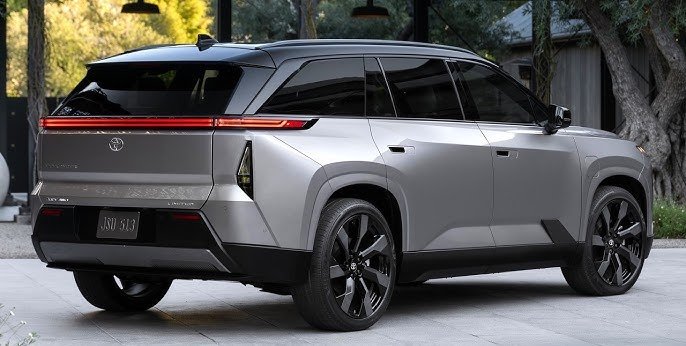
Electronic door handles on modern vehicles have come under fire in recent months. These flush-fitting door handles may have aerodynamic and style advantages, but they’re potentially fatal in an emergency situation if the doors can’t easily be opened. The issue is so concerning that China has moved to ban flush-style door handles, set to take effect in 2027. But Toyota has just shown us that buyers don’t need to choose between style and safety. The all-new, 2027 Highlander has flush door handles—but it also has straightforward mechanical backups if needed.
At a glance, the 2027 Highlander’s door handles look as sleek and smart as any other modern handle with an electronic mechanism. But look more closely, and you’ll notice a physical tab inside the handle with an icon of a car with an open door on it. The tab is small but easily decipherable, and there’s also a removable section where you can insert the key should the vehicle lose power.
2027 Toyota Highlander door handle
Toyota told Carscoops that one pull of the manual tab will unlock the door and a second pull will open it. It’s a logical solution, and, in a worst-case scenario, emergency crews would likely get the door open quickly. Fortunately, the manual override handles are found inside, too. If the door button doesn’t open the door electronically, the manual handles are clearly located on the front/rear door panels, exactly where you’d expect a normal door handle to be.
Toyota’s solution is much simpler than what certain other automakers have offered until now, based on a Consumer Reports analysis of electronic door handles. In the Tesla Model X, you must first remove a speaker grille to manually open the rear doors, while Rivian’s R1T and R1S require you to first remove a door panel and pull down on a release chord. These are needlessly complex methods that won’t be obvious to anyone struggling to get out of a car in an emergency, let alone small kids who often sit in the back seat.
Toyota’s door handle solution isn’t just convenient—it could quite literally save your life if you’re trapped in your car. Earlier this month, Tesla was hit with a lawsuit alleging that a Model Y driver died in his burning car because he was unable to open the door after a crash. A Bloomberg News investigation revealed that at least 15 lives have been lost in this way due to Tesla’s door handle designs.
This isn’t an issue exclusive to Tesla, though. In another incident, the driver of a Xiaomi SU7 Ultra also died after crashing, as rescuers were unable to open the doors after their electronic mechanisms failed.
Over the last few years, car design has focused too often on aesthetics at the expense of safety and usability. The electronic door handle saga is a clear example of this, as multiple lives have been lost, which is why we expect other regions to follow China’s ban.
But it’s not only electronic door handles that are safety hazards. An over-reliance on touchscreen-based controls, distracting driver-assistance features, and even quirky gear shifters all represent a step back in intuitiveness. Fortunately, modern safety tests like the new Consumer Reports Safety Verdict are evolving beyond only crash safety and avoidance. These tests will now penalize automakers for distracting or dangerous controls, and it’s surely only a matter of time before door handles without a straightforward manual override can knock a few points off a car’s safety score, too.
The 2027 Toyota Highlander shows that advanced tech, minimalist design, and uncomplicated mechanical safety backups can coexist—other manufacturers may soon be forced to adopt the same approach.
Nouvelles connexes


