Renault Picks Up Arms, To Start Production of Kamikaze Drones
I wasn’t here to experience that myself, but the people who were when the carmakers of the world started making weapons in the 1930s and 1940s must have felt a degree of unease comparable to what I am feeling now, when I learned French carmaker Renault will do the same in our day and time.
As I am writing this, the French capital Paris is host to the world's largest international land and air defense and security trade exhibition, Eurosatory, so everyone who's anyone is there presenting stuff and trying to make deals.
So are French defense contractor Thales and carmaker Renault, who joined forces to present earlier this week something called the 4 Troop prototype, a Rafale-based contraption equipped with all it needs to be a sort of drone mothership.
The tie-up between the two companies, however, seems to go a lot deeper than that prototype. In fact, they announced one day after the unveiling of the SUV a partnership meant to jointly develop and industrialize the large-scale production of loitering munitions.
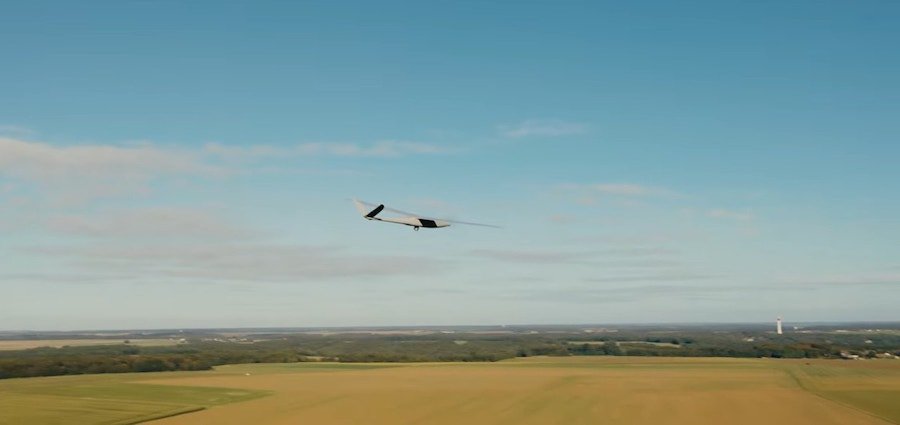
The weapon in question is called Toutatis, and it is a short-range kamikaze drone that can be fired by dismounted soldiers, but also launched from combat vehicles, aircraft, and naval platforms in high-intensity conflicts.
The Thales-designed weapon carries a rather small, mission-configurable 2.2-pound (one kg) warhead, tailored to be used against combat vehicles. Remote-controlled and partly autonomous, the drone can operate as part of swarms and can withstand electromagnetic jamming.
The design is relatively new on the market, but the tie-up between the two companies means a lot of them will start rolling off assembly lines as early as next year. More specifically, Renault and Thales are talking about a production capacity of 1,000 units per month in the first year alone.
It’s not exactly clear what the two parties will be contributing to the project, but it’s not hard to imagine that Renault will use its assembly facilities to make these things. We have no word on what those facilities would be.
It’s also unclear what Thales and Renault plan to do about the 4 Troop prototype presented earlier this week. As shown, the SUV remains, mechanically, its civilian self, but is packed to the teeth with Thales hardware designed to give it secure communications and tactical connectivity needed for operational coordination of drones.
All the modifications made to it were integrated directly into the Rafale’s native electronic architecture, and they are meant to allow the vehicle to perform a role of command center for drone operations, no matter whether they are designed to conduct missions on land or in the air.
Supposedly, the 4 Troop is a preview of something called the Véhicule Civil Multi-Rôles (VCMR), a design that still far from being realized.
Nouvelles connexes


