Tesla Just Killed Half Its Model Lineup
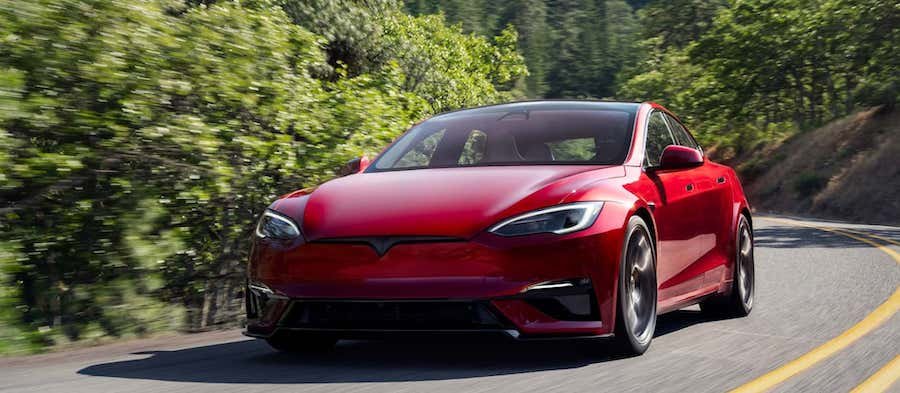
That means when summer rolls around, Tesla will have just three vehicles left: The Model 3, Model Y, and Cybertruck.
At this time, there are no replacements for these two vehicles. Or rather, there are no automotive replacements. The Model S / Model X factory in California will be repurposed to churn out Optimus robots. More on that in a bit.
Musk Sees An Autonomous Future
The news came right at the beginning of the company's financial call. Musk, seemingly struggling for words at times, broke the news with little drama.
"It’s time to basically bring the Model S and X programs, uh, to an end with an honorable discharge because we’re really moving into a future that is based on autonomy. And so, if you’re interested in buying a Model S or X, now would be the time to order it, because we expect to wind down on S and X production next quarter."
-Elon Musk
Of course, it’s not like these two vehicles were killed before they had a chance to live. The Model S was Tesla’s second production vehicle after the original Roadster, debuting way back in 2009 in prototype form. It entered production for the 2013 model year, and the Model X SUV with its gullwing doors followed in 2015. Neither model received notable visual updates through their long lives, though tech and performance upgrades at least kept them cutting-edge, more or less.
As for their replacements, as we mentioned previously, there are none. Instead, the factory space once used for these cars will be repurposed to fulfill Musk’s vision of Optimus robots for everyone, everywhere.
By Evan Williams
“We’re going to take the Model S and X production space in our Fremont factory and convert that into an Optimus factory, with the long-term goal of having a million units a year,” said Musk.
As for when that will happen, he was conveniently vague beyond saying it would be a longer process than retooling for another car, because the robot supply chain is completely different. Whether longer is a year, or two, or 10, is anyone’s guess.
Whether you’re a fan of Tesla or not, there’s no denying the tremendous impact these two vehicles had on the global automotive industry. They pioneered and showcased advanced Level 2 driver assists – at times rather recklessly – that are widely used by many automakers today. The early versions of Autopilot, flawed as they were, captivated drivers and sent lawmakers scurrying into action, crafting laws regulating how drivers use hands-free systems and clarifying who’s to blame when accidents happen.
And you can’t talk about either the Model S or X without mentioning two words: Ludicrous and Plaid. While the Tesla Roadster showcased EV performance for the niche sports car segment, S and X models equipped with Ludicrous and later Plaid tri-motor systems turned the high-performance world on its head. Suddenly, a comfortable three-row SUV could hang with ultra-powerful, million-dollar hypercars... and flat-out embarrass any modern muscle car.
What’s Next?
It’s no secret that Musk has a lot of work to do if he hopes to reap the benefits of the insane billion-dollar pay package Tesla shareholders approved last year. Whether that actually involves new Teslas that people can actually drive, however, remains to be seen.
The long overdue second-generation Roadster may or may not debut on April 1 of this year – Musk offered no new insight during the Q4 call. Cybercabs are still a thing, but people don’t drive those. And the Tesla Semi is also still in the mix, but that’s a commercial vehicle and one that may never take off as Musk envisions.
For at least the near future, Tesla buyers will have just three choices: A Model 3, a very similar Model Y, or a very expensive (and polarizing) Cybertruck. Or, since Musk thinks the future is fully autonomous, you could just stay home and let your Optimus robot handle things.
By subscribing, you agree to receive newsletter and marketing emails, and accept Valnet’s Terms of Use and Privacy Policy. You can unsubscribe anytime.
“It’s slightly sad, but it is time to bring the S/X programs to an end,” said Musk. “It’s part of our overall shift to an autonomous future.”
Nouvelles connexes


