Honda's Fake Transmission And Engine For EVs Does Something Hyundai Wouldn't
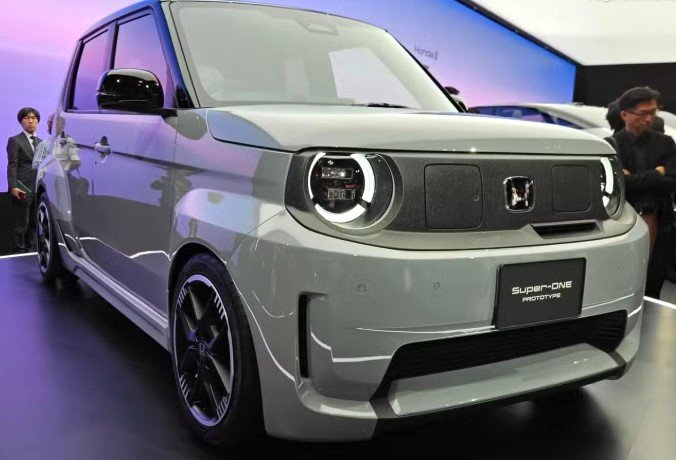
Based on the N-ONE:e kei car, it gets a beefy body kit with two-inch fender flare extensions on each side, slammed stance, high-performance tires, and a new driving mode that makes the single electric motor behave like a combustion engine. If that sounds familiar, it’s because Hyundai used the same trick to make the Ioniq 5 N one of the best EVs of the modern era. But while Hyundai might have been first, Honda did something Hyundai should’ve…
Learning From Hyundai’s Mistakes
Anyone driving the Ioniq 5 N in anger might recognize the behavior of the simulated shifts and torque curve and the sound of the engine accompanying them. That’s because the engine sound was derived from the Elantra N, while the faux transmission mimics the Elantra N’s optional eight-speed DCT. Hyundai could’ve chosen any engine to replicate, and many have argued it should have gone more aggressive; giving a 641-horsepower EV the soundtrack of a 276-hp inline-four is doing it a disservice.
Well, Honda has clearly learned from Hyundai’s mistakes, and for the forthcoming Super-ONE, now in the late stages of its development, its engineers gave it an engine and gearbox combination not found on any existing Honda product.
The simulated transmission has seven gears, which is a number of gears only ever used for the DCT of the MDX Hybrid and RLX Hybrid. But Honda didn’t replicate that transmission; instead, it created a completely new one for the Super-ONE, simulating closely-stacked ratios to guarantee driver interaction. Speaking to CarBuzz at Honda’s Tochigi Proving Ground in Japan, Super-ONE lead engineer Kohei Akimine confirmed that he wanted drivers to be shifting gears as often as possible on a twisty road, and the seven ratios were tailored explicitly for that purpose.
Honda’s 4-Cylinder Sounds Like A V6 AND A V8
Honda applied a similar philosophy when creating the soundtrack that accompanies the power curve and gearing. If you aren’t physically limited by an actual engine, you can make it sound like whatever you want. But it didn’t go overboard and give the Super-ONE a screaming V10 or a thunderous V8. Instead, it seems very inline-fourish, until you notice some odd burbles and bass that don’t seem quite so four-cylinderish after all.
Akimine explains that the soundscape is entirely bespoke, too, leveraging a familiar four-cylinder note like you’d hear in a 2025 Civic Type R, but with some added spice.
“It’s not just one engine. You will sometimes hear some rumbles and other noises, which are more than the Type R’s four-cylinder. We made these sounds to sound like a V6 and a V8, so it’s not just one engine.”
- Kohei Akimine, Honda Super-ONE Chief Engineer
In doing so, Honda has given the Super-ONE a character unlike any other Honda performance vehicle. While Hyundai has made the Ioniq 5 N sound and feel like an Elantra N amplified, Honda’s created something unique. And considering the Super-ONE we drove was still a prototype, there’s room to improve on it still before the car comes to market in 2026.
Honda Swears It Didn’t Copy Hyundai
Akimine admits Hyundai beat Honda to the punch with simulating an ICE powertrain in an EV, but Honda’s take on it isn’t simply taking inspiration from Hyundai and fixing what the South Korean firm did wrong. According to Akimine, Honda has been working on this concept for years, and Hyundai just got there first.
It’s not entirely implausible, as the versatility of electric motors has long made them candidates for exactly this sort of customization. We previously uncovered BMW patents that would allow you to customize your own torque curve to an even greater extent, and it’s not beyond the realms of possibility that several automakers were toying with similar tech all at once. Think of it as the automotive equivalent of carcinization - the form of convergent evolution where entirely unrelated species of animals all evolve to have a crab-like form. This time, though, everyone just wanted to make EVs fun, and in the case of Hyundai and Honda, both have succeeded brilliantly. Bravo.
Related News


