The 2026 Honda Africa Twin Hasn't Really Changed Much, And That's The Whole Point
The Africa Twin isn’t just another adventure bike in Honda’s lineup. It’s one of the most iconic vehicles to bear the Honda badge. The name alone carries decades of rally heritage, dating back to Honda’s Dakar-winning machines of the late '80s. That DNA still matters today, especially in a segment now crowded with liter-class adventure bikes from Europe and Japan.
While some rivals chase bigger numbers and more extreme specs, Honda focuses on balance. The modern Africa Twin doesn’t try to intimidate you. It's slim between the knees, manageable at low speeds, and genuinely usable off-road. That’s a big reason it’s stayed relevant even as the segment becomes more premium and more tech and horsepower-heavy. Riders still want a bike that feels like an actual tool, not just a rolling spec sheet.
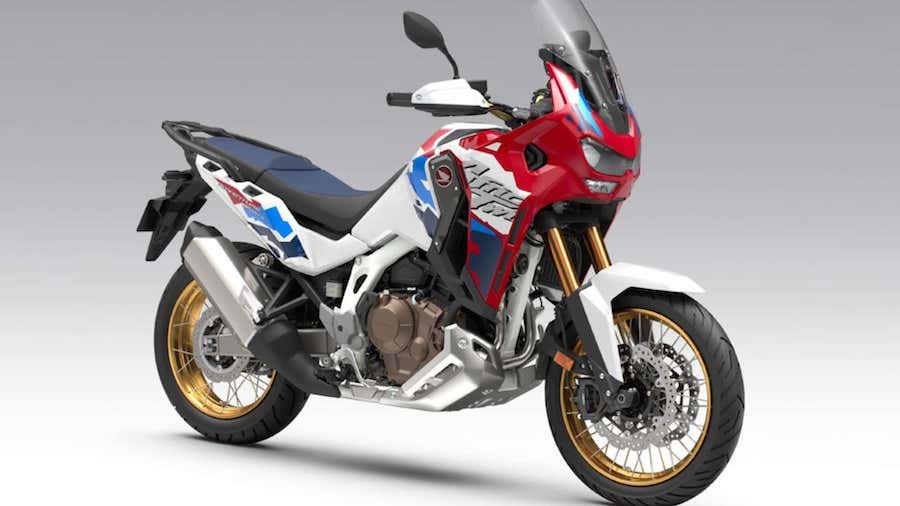
For 2026, Honda sticks to that philosophy. No mechanical changes, just new colors and graphics across the range, and ones that nod to the nameplates' retro heritage at that. Underneath, it’s the same 1,084cc parallel twin putting out about 100 horsepower and 82 pound-feet of torque. Those numbers are far from the top of the class (they're bordering middleweight territory, to be honest), but they’re tuned for the real world. Strong midrange pull, smooth power delivery, and easy highway cruising without feeling frantic at higher rpms.
The real standout, though, is Honda’s Dual Clutch Transmission. It's interesting to note that nearly half of Africa Twin buyers chose DCT in 2024, which says a lot. In a segment traditionally dominated by purists, that’s huge. DCT removes the clutch lever entirely and handles shifts for you. No stalling on technical climbs. No hand fatigue in traffic. You can still shift manually with paddles if you want, but when you’re tired or distracted, the bike steps in. It makes a big adventure bike way less intimidating, especially for newer riders or those moving up from smaller machines.
Honda offers two main versions of the standard Africa Twin. The base model runs fully adjustable Showa suspension. The Electronic Suspension version upgrades to Showa’s smart system that automatically adjusts damping based on conditions. You can even change rear preload while riding, which is perfect when switching between solo trips and loaded touring. That version also adds heated grips and an accessory power socket.
Then there’s the Africa Twin Adventure Sports. This is the long-haul machine. It gets a larger 24.8-liter fuel tank, good for roughly 315 miles of range compared to about 239 miles for the standard bike. Honda also fits a 19-inch front wheel instead of the off-road-focused 21-inch setup, improving stability and feel on pavement. Seat height sits at 32.9 or 33.7 inches, depending on the setting.
Tech is properly modern. A six-axis IMU manages traction control, cornering ABS, wheelie control, and rear lift mitigation. On DCT models, it even tweaks shift timing based on lean angle. You get multiple ride modes, cruise control, heated grips, USB charging, and a 6.5-inch touchscreen with Apple CarPlay and Android Auto. Lighting is full LED with daytime running lights and cornering lights that illuminate the road mid-turn. Honda also offers four factory accessory packs for urban riding, rally styling, long-distance touring, or full adventure builds.
For 2026, both standard Africa Twin models come in Grand Prix Red, Matt Ballistic Black Metallic, and Pearl Glare White. The Adventure Sports gets Matt Iridium Gray Metallic or a bold Tricolore white scheme with gold wheels.
Related News


