This New Tax Rule In India Could Make 400cc Motorcycles More Expensive Globally
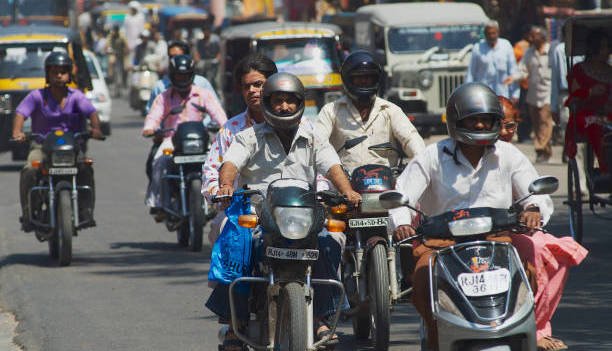
India may have just rewritten the rules on what makes a motorcycle "affordable," and this time, it's no longer just about tech, features, and performance. Rather, it's about how big your engine is. You see, a recent Goods and Services Tax (GST) revision has forced a hard divide in the market, seeing taxes on bikes 350cc and below slashed to just 18%.
While this is good for small-displacement machines, which frankly, make up the bulk of the Indian market. The same cannot be said for premium bikes with bigger engines. Anything with an engine larger than 350cc will fall into a higher tax bracket that can reach around 40%. That one change has pretty much redrawn the battlefield for manufacturers, and the ripple effects could reach far beyond India, maybe even a dealership near you.
And that's because if you’ve been paying attention over the past couple of years, you’ll know that India has become the global engine behind the modern small- and mid-displacement segments. Bikes like the Triumph Speed 400 and Triumph Scrambler 400 X weren’t just designed for India, but they absolutely relied on it. High local demand meant huge production volumes, and that’s what allowed brands to price these bikes so aggressively in export markets.
Same goes for machines like the Harley-Davidson X440 (which hasn't even had the chance to get itself up on the global stage) and even Royal Enfield’s newer 450cc platforms, including the Royal Enfield Guerrilla and Himalayan.
Now imagine that volume suddenly shifting away.
That’s exactly what this tax structure is doing. A 349cc bike and a 398cc bike can feel nearly identical on the road, but the pricing gap between them in India just got massive. So naturally, buyers are flocking to the cheaper side of that divide. Royal Enfield is sitting pretty here, with most of its lineup under 350cc and monthly sales holding strong. Meanwhile, manufacturers with 400cc offerings are stuck in a tough spot. Raise prices and risk killing demand, or absorb the tax hit and watch margins shrink.
Both options suck for both consumers and the companies alike. So they’re likely going to do what the industry always does when regulations get weird: Engineer their way around it.
Expect a wave of "new" 350cc bikes that are basically downsized versions of existing 400s. Same platforms, slightly smaller bore, maybe five horsepower less, and suddenly the bike drops into a much friendlier tax bracket. For most riders, that performance difference is barely noticeable. However, the price difference definitely is.
But here’s where it gets interesting for the rest of us. If India starts buying fewer 400cc bikes, production volume drops. And when volume drops, the cost per unit goes up. That’s how you go from “This thing is absurdly cheap for what it is” to “Okay, yeah, that price makes sense.” Not a massive jump overnight, but enough to dull the edge that made these bikes so compelling in the first place.
Naturally, manufacturers will try to soften the blow. Shared platforms, deeper localization, and global demand will all help keep things in check. Europe still loves these bikes thanks to A2 licensing rules. Southeast Asia is warming up to them. Trust me, I live there. Here in the Philippines, the 400cc segment (the minimum displacement required for freeway access) has become a compromise for a lot of people who need freeway access but can't afford or wouldn't prefer to buy a car.
So it’s not like the 400cc segment is about to disappear.
But the dynamic will surely change. India is no longer a guaranteed volume engine for this class. And when the world’s biggest motorcycle market shifts its focus to 350cc, everyone else will have to adjust.
So no, this doesn’t mean your next 400cc bike is suddenly out of reach. But it does mean the golden era of ridiculously affordable, globally developed middleweights might be getting a little less ridiculous. And maybe a little more expensive, too.
Related News


