VW Beetle Engine Rebuild Shows The People's Car Was Weird To The Core
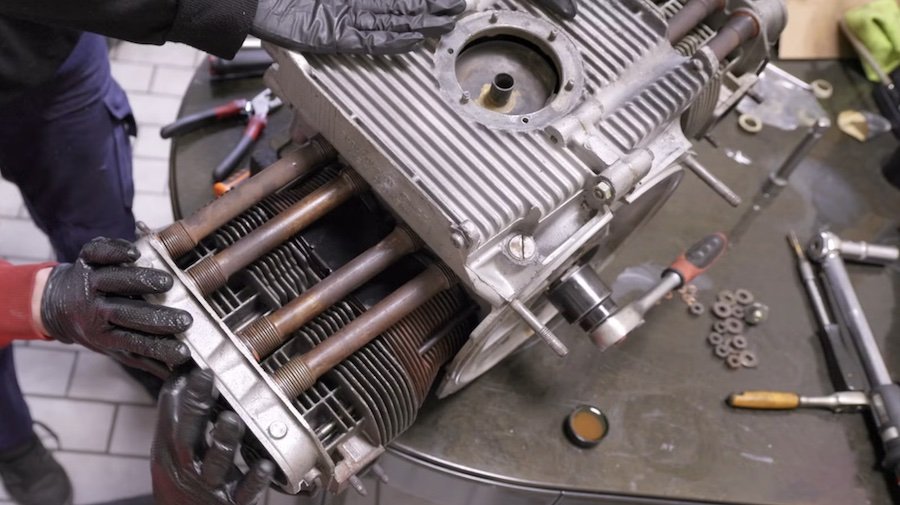
Again, one of the strangest aspects is the engine, which was a flat-four that was air-cooled. As such, if you're not familiar with them, it's fascinating to see them go back together, which is exactly what this video is all about.
All The Weird Aspects Of The Volkswagen Beetle Engine
The video shown here comes to us from YouTuber Joy van Haelen, who is working with a friend to rebuild the Volkswagen engine from a 1978 Beetle. It covers the assembly of the engine from start to finish, though if you want to see the teardown with more information as to why a rebuild was necessary, you'll need to check out this one. However, the rebuild video does touch on what was apparently an overheating issue that warped the connecting rod ends.
The differences from your typical water-cooled inline and V configuration engines starts early, since the crankcase alone is its own part, and it's split down the middle. Plus, because the rod ends are all in the middle of that case, they have to be bolted to the crankshaft before putting it all into the crankcase, as opposed to sliding the rods down the block's cylinder bores and bolting them on the bottom side of the crankcase.
That also means that the actual pistons need to be attached to the tops of the rods, and the actual cylinders need to be put on after the pistons are assembled. The way Joy van Haelen and her friend did it was by fitting the pistons with their piston rings into the bottom of the separate cylinders, and sliding those combined pieces down the crankcase bolts to the rods to connect them with the pistons. Then she could slide the cylinders down the rest of the way to the crankcase.
1963 Volkswagen Beetle flat four engine underside
The separate individual cylinders is pretty strange, but makes some sense when you remember that these engines depend on air for cooling instead of water and coolant. You want as much surface area and as little material as possible so that cooling air can absorb heat, and it was probably easiest to do that with these smaller individual pieces than bulky combined castings.
Of course, as a result of not having a conventional engine block, there isn't anywhere for the push rods to go. So the car has individual little tubes for them to go from the camshaft in the crankcase to the cylinder heads. The heads at least, are pretty normal compared to other cars. They hold the rockers that the push rods push to actuate the valves, and the heads even cover all the cylinders on each side. So not everything is strange.
It Might Be Weird, But It's Great To Work On
There aren't many engines that are quite like those in the Beetle, with the exception of air-cooled Porsches, and, to an extent, more modern Porsches and Subarus. Still, there are plenty of reasons that these engines, as well as those in other air-cooled VWs, are a great starting point for learning about building any engine.
For one thing, although a bit odd, they're quite simple, lacking much in the way of vacuum lines and wires for various auxiliary controls. For another, they're extremely plentiful. VW built these engines for more than half a century for various models, and more than 20 million of them went into Beetles. A healthy aftermarket exists, too, so you should always be able to get parts and help. They're also both forgiving, so if things are a little off, it'll likely still run, and they require on-going maintenance, so you'll continue to learn about the engine and making it work better.
Nouvelles connexes


