Electric Alpine A110 to use wild R5 Turbo 3E platform
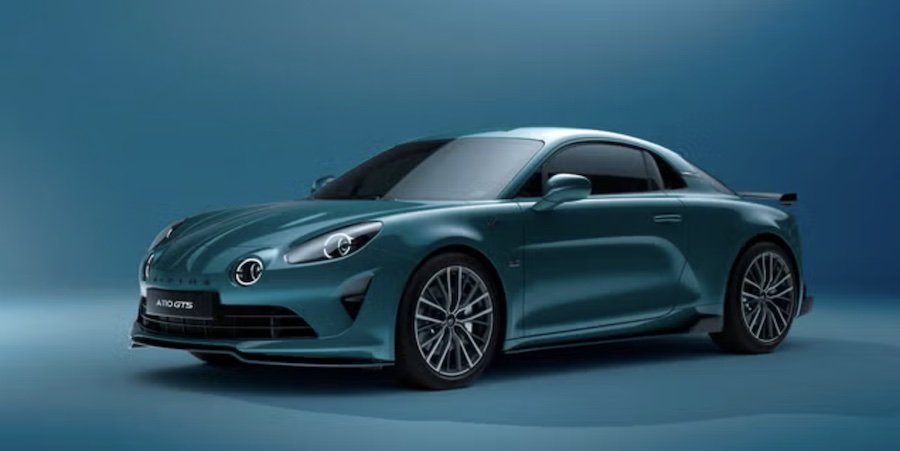
Alpine's keenly anticipated electric-only replacement for the A110 sports car, due next year, will share both its platform and its key mechanical components with the radical Renault 5 Turbo 3E mega-hatch.
Alpine CEO Philippe Krief revealed the close relationship of the two cars in an exclusive interview with Autocar at the recent Rétromobile classic car show in Paris.
The new electric A110 will spawn a number of variants that Krief said will help transform the Renault Group's premium performance brand into a true Porsche 911 rival.
Even sportier A110
The new EV (which will continue to wear the A110 badge) will be "only slightly" longer than today's car, said Krief, and its styling will be close to the current model (itself inspired by the original A110 Berlinette built between 1963 and 1977), with elements such as the quad headlights and squat, mid-engined silhouette remaining but delivered in a more futuristic aesthetic, rather than a retro one.
Both the third-generation A110 and the 5 Turbo 3E will use a new aluminium chassis structure called the Alpine Performance Platform (APP), which places a 70kWh battery pack behind the occupants to give an uncompromised driving position.
The new A110 will therefore be similar in height to the present one, said Krief. As such, he expects it to have an even sportier driving position than today's car, with the driver's feet raised, Formula 1-style, and the seat very reclined.
Power output for the EV is expected to surpass the 345bhp of the current A110's run-out R Ultime special.
At launch, power will be supplied by two rear-mounted electric motors, but the door is still ajar for the new A110 to be offered with in-wheel motors – the solution used by its Renault platform-mate.
In the 5 Turbo 3E, combined output is pushed to 533bhp via motors within the rear wheels, giving the car a 0-62mph time of less than 3.5sec and a 168mph top speed.
Thanks to the APP being designed to accept many powertrain configurations (it could even have the potential for hydrogen propulsion in the future), the technology opens the possibility of a mega-powered, four-wheel-drive A110, with in-wheel motors placed at the front.
However, price will be one of the key stumbling blocks, as the 2027-bound 5 Turbo 3E is being sold for £140,000 – but it could well be part of the A110's future as demand for higher-performance A110 electric models grows.
Initially, however, Krief told Autocar that the new coupé will have a target kerb weight similar to the average of its combustion-engined rivals today – about 1500kg – and its battery endurance should allow three full-speed laps of the Nürburgring or an on-road range of more than 300 miles.
Krief, who before joining Alpine in 2023 carved an engineering career at Fiat and then Ferrari (where he masterminded the lauded 458 Speciale and 296 GTB), sees Alpine's key qualities as lightness, sensitive handling that leads to driving pleasure and French "savoir faire" – the ability to perform with ease and flair.
He believes the last of those is already built into today's A110 and must be retained.
As well as a bold new platform and powertrain, the next-generation A110 will introduce a new driver-focused cockpit that majors on physical controls.
Indeed, it will be the French performance brand's first bespoke interior, rather than one adapted from its Renault parent company.
A key part of the brief is for the A110 to deliver more focused driver engagement, with minimal distractions, than it has done before.
Expect therefore an interior that features minimal digital screens, offering a more analogue experience. Speaking previously to Autocar, Alpine design boss Antony Villain said the A110's cabin will be a "new generation" that will "stay with the same ingredients, but we push further" with "a lot of physical buttons mixing with minimal digital things".
Having "instinctive access to every crucial function", said Villain, will allow drivers to create an "emotional relationship with the machine", because "when you buy a sports car, you want to be in control".
"It's not the car that drives you and controls you: it's the opposite," he added.
Range expansion
The new EV will be the first of what Alpine expects to be a new expanded range of A110 models – as Porsche has cultivated with its 911. This, according to Krief, amounts to at least four two-door versions, these being a coupé, a convertible and lengthened, four-seat GT versions of both (which were originally tipped to revive the A310 name).
Krief sees the comparison with the 911 as important: he visualises a time after Alpine has launched more products and achieved greater brand awareness when buyers will "hesitate to decide" between Alpine and Porsche.
When he joined the company three years ago, said Krief, the major mission was to launch seven cars in seven years.
Two of those, the A290 and A390, are already on sale and the electric A110, in its various guises, is imminent in several forms.
After that, there might be a bigger SUV than the A390 (Krief said this was mainly planned for a US expansion currently on the back burner) and, once the company and its reputation are sufficiently expanded to justify it, an ultra-exclusive hypercar drawing influence from Le Mans racers.
The latter has already been previewed by the 1000bhp hydrogen-fuelled V6 Alpenglow concept, and it has been suggested that a production version could be built on the flexible APP.
Krief sees future Alpine models divided into what he calls three pillars.
First there's the A110, which will always be the icon and will be "renewed and renewed and renewed".
Then there are the cars like the A290 and A390, which offer "everyday extraordinariness". That pillar can be expected to expand, although the only possibility Krief mentioned was a large estate car.
And the third pillar embraces cars that "offer the maximum" and can join the ranks of true hypercars.
Cars in this category must not just offer very high performance and high technology, said Krief, but also allow the owner a very high level of customisation.
However, before Alpine can become a player in this arena, he believes there must be significant brand building to give it the credibility to sell cars in the €1 million bracket.
Its F1 team, for which Krief has overall (but not day-to-day) responsibility, can help here, he suggested.
For now, Alpine's attention is firmly focused on the new A110, which should lead the brand into new markets.
"The market for sports cars amounts to 360,000 units worldwide," said Krief. "Around 90,000 of these are sold in Europe, 90,000 in Asia and 180,000 in the US.
"We will launch the new car in Europe first, then in Asia, and later, if the conditions are right, we will take it to America.
"But over the next four years or so, we have a lot of work to do."
Q&A: Philippe Krief, CEO, Alpine
What made you take the Alpine job?
“I liked the challenge of launching seven cars in seven years, electric but also Alpine. Some colleagues where I worked believed it wasn’t possible, so I said ‘let’s see’.”
You’re an engineer by training. How tough are you finding running a whole company?
“When you’re expanding a brand, it’s all about the products, so coming from the engineering world is a big advantage. You’re very careful to see that the products are not compromised. But now I’m dealing with money, network, brand building and the rest. These are new, but so far I’m finding them very interesting.”
You’re famous for your Ferrari experience. What is its value in this role?
“This helps me technically, of course, but it will be really helpful if and when we build a supercar. You have to make a proper business out of building very special cars, and currently no one can do that apart from the red guys. That’s an important lesson.”
Did you have a particular view of Alpine before you joined the company?
“I always believed Alpine was a marque with high potential. Its history relates to my own past, with sports cars and performance cars. But I was even more interested in the challenge of putting the Alpine brand where it deserved to be. It had qualities that are universal for cars of this type: driving pleasure, premiumness, lightness and French savoir faire.”
How can you make an electric sports car feel light when it has to be heavier than a previous ICE version?
“Well, for one thing our electric car will be lighter than most. But in any case, lightness doesn’t come just from putting a car on the scales: it comes from good acceleration and quick and linear driving responses. We know how to deliver that.”
Your A290 EV has received praise for its agility and performance but some criticism too. Are you pleased with its reception?
“The A290 is a good car, but it is also our first step. Our mission is making cars that are ‘everyday extraordinary’, and we think the A290 has done that. Along with the bigger A390, its job is to attract new people, not just car geeks.”
How daunting is the challenge to build EVs for a market where engine performance was key?
“My opinion is that emotion is the real key. Sure, it’s a challenge, but we have to make emotional cars. Mozart and The Rolling Stones are very different, but they’re both emotional and it’s possible to be a big fan of both.”
What do you expect Alpine’s Formula 1 campaign to bring to Alpine road cars?
“We’ve researched this: if you ask people what will increase a brand’s prominence quickly, they talk about two things: seeing more cars in the street and motorsport. We don’t have 30 years to build this brand, so F1 is going to help a lot. Winning isn’t critical: just being there increases awareness.”
Related News


