Ferrari Admits What Other Automakers Won't Say About Buttons In Cars
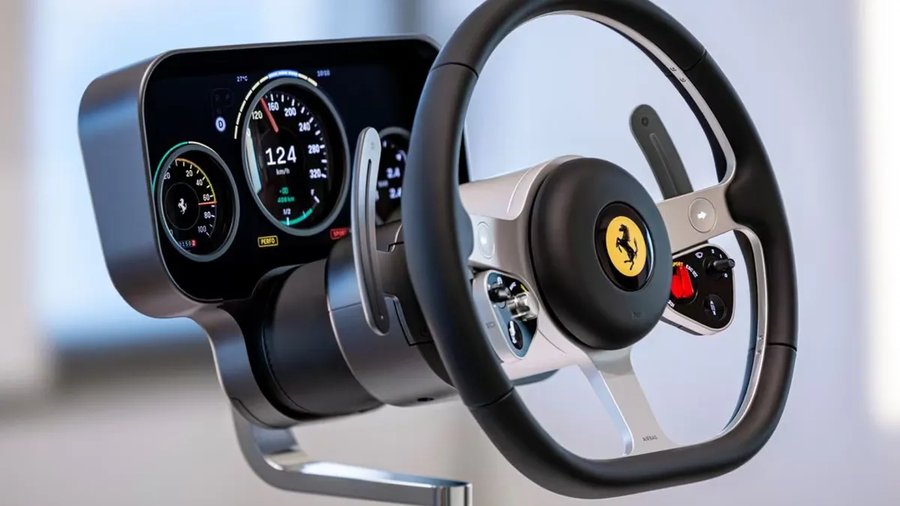
Ferrari is making a big deal about bringing back buttons instead of haptic touchpads. In a new interview, the CEO makes it very clear why going to haptics and touchscreens versus physical controls, even for brands like Ferrari, is so appealing. And it's not necessarily about design.
Why? Because It's Cheaper
Ferrari chief exec Benedetto Vigna was in India for the release of the 849 Testarossa in that country. He had plenty to say about India's growing number of high-wealth individuals and the potential for the brand, but it was his surprisingly candid words about Ferrari's interior decision that got our attention.
Autocar India asked about Ferrari's decision to go "retro" on the 849's steering wheel, with actual buttons. Vigna said, "touch [buttons] is something that is made for the supplier's advantage. Making a touch button is cheaper. 50% cheaper."
If you want the nice hand-crafted and "beautiful" buttons, then you need to make more tooling. He acknowledged that underneath the exterior, a haptic button is the same no matter what automaker purchases it.
Why did Ferrari change to physical buttons? The company didn't like being the same. "Look, we have no problem to go around with electronic consumer products that look the same, right? But we don't like to go around with cars that all look the same. So we need to do something unique."
The change started with Amalfi. It had buttons, and, Vigna points out, more anodized aluminum. It's more interactive, he said. The new Testarossa that he's there for, is similar. Before Ferrari, Vigna worked in tech, including semiconductors and motion-activated user interfaces. So it's interesting to see him advocating for more analog controls.
Do Ferrari Buyers Care About Cost?
It's hard to imagine that Ferrari buyers are concerned with cost. Especially in spending a few hundred dollars more to get the delicate and mechanical steering wheel that Ferrari now offers.
That could add more reasons for Ferrari's return to physical controls. Buyers wanted more interaction, which shows they'll pay for it. Even better, Vigna points out that Ferrari now sells a replacement wheel for the Purosangue and 12Cilindri with more analog controls, so now the automaker can get paid a second time.
The Luce, Ferrari's upcoming EV, leans even harder into analog. It's a surprise in an EV, where brands before have done everything they can to be bleeding-edge futuristic, but it also works.
Ferrari had the Luce's interior designed by Jony Ive, the former head of design at Apple. The result is real buttons and switches and a look that's like nothing else. Not just from Ferrari, but from anyone in the modern era. The retro is strong, but the result is a wonder.
Do the Volkswagens of the world face the same 50% increase in cost for going back to buttons? Probably not, because they don't need to be at the high level fit and finish as Ferrari. But there's no doubt that there is a significant cost, which is why turning other brands around has been a long journey while Ferrari embraced it.
Related News


