Hyundai Just Made A Big Solid-State Battery Breakthrough
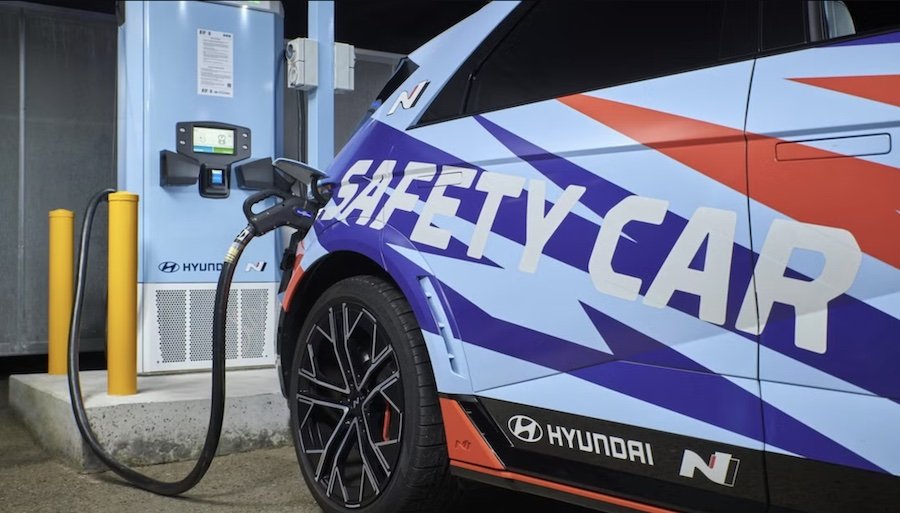
Hyundai has just obtained a patent for a tech that lets it use copper in the harsh environment of a sulfide-based electrolyte. It's a breakthrough that could give models like the Ioniq 5 packs that deliver not just massive range, but a much lower cost.
New Idea Brings Simple Metals To Advanced Batteries
The patent isn't for a new material or a new cell chemistry; rather it's the discovery of a new way to apply the cell's internal layers. With the application of layers using the patent design, copper could replace nickel or stainless steel to bring electrons to the cell's terminals.
Hyundai's design in the patent is for a battery cell is made up of six layers: a copper anode collector layer, the protective coating, an anode layer, an electrolyte layer, a cathode layer, and then another current collector layer. Because of how batteries work, that outer layer can already be another lower-value metal, like aluminum foil.
We'll admit the technical details are boring, but what matters is the effect. According to the patent filing, the new layer could deliver significantly better adhesion, letting it stick together longer and have more durability. It could also maintain higher battery capacity for far more cycles, while delivering more capacity and better internal performance.
In short, it would make solid-state battery cells more cost-effective and easier to make. That's on top of the solid-state benefits we already know about, like more capacity, greatly reduced flammability, even longer-term durability than existing cells, and faster charging.
Battery Internals Aren't Sexy, But They're Still A Big Deal
When it comes to electric batteries, it's the anode, cathode, and electrolyte that get the attention. These are where lithium and nickel, cobalt, and other rare earth metals are used, and where automakers are developing new chemistries that use less of them. A solid-state battery doesn't necessarily change those materials, but it does swap the liquid electrolyte for one that's solid. Instead of a solvent like lithium hexafluorophosphate, a number of solid materials are used.
One promising material uses sulfides, but sulfides are corrosive. They're what causes that green buildup on the 12V battery in your car. If sulfides in the air can do that to your exterior battery terminals, imagine what they can do to the thin copper sheet inside the cell.
That corrosion has forced automakers to use stainless steel or nickel alloys to collect the electrons and send them to the battery terminals. Both materials are expensive, and it's tough to get the right one. Moving back to copper reduces costs and improves the conductivity inside the battery.
Solid-state battery cells have been on the horizon for years now, at least for EVs. Outside of cars, they have already been used successfully in space and show promise in industrial machinery and even pacemakers.
Automakers have suggested that solid state could double range and charge in just 10 minutes, and do it for decades. BMW has recently started testing SSBs in an i7, Toyota is planning to bring them to market soon, and Nissan has repeatedly said that it believes the company can have them on the road with customers in 2028. Though not all battery companies are on board. The head of CATL, the world's largest battery manufacturer, pushed back on the tech, suggesting it was impractical and possibly not safer.
Related News


