Mazda Admits Making a Mistake With Its Large SUVs
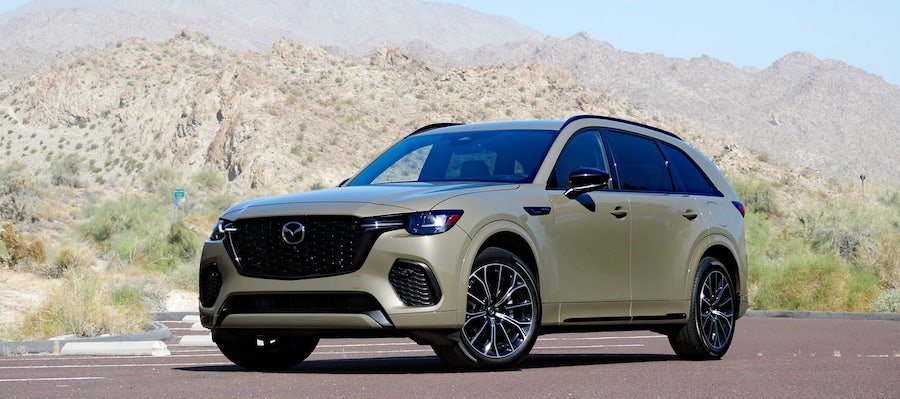
The First Mazda Large Product Group Stumbling Out of the Gate
The CX-60 was the opening act for Mazda’s new Large Product Group, the platform meant to push the brand more upmarket with longitudinal engines, rear-drive proportions, and plug-in hybrid options.
On paper, the package was promising: a 2.5-liter four-cylinder paired with a 129 kW motor, a 17.8 kWh battery, and standard AWD. The CX-70, CX-80, and CX-90 all share variations of this formula, with the CX-70 and CX-90 aimed at North America and the CX-60 and CX-80 developed for Europe and Japan.
In practice, however, the plug-in hybrid versions didn’t land smoothly. Drivers noticed abrupt transitions between electric and gasoline power, and the new eight-speed automatic tended to shuffle gears more than expected. Those issues went beyond just bad reviews – they triggered two mechanical updates in the first 18 months. Mazda acknowledges these early models didn’t meet expectations and that the development process itself was the weak link.
So, What Went Wrong?
During an interview with Australia’s Drive, Mazda Europe’s senior manager of product development and engineering, Alexander Fritsche, openly discussed what went wrong. Without naming the CX-60 directly, he described a “quick start with one product” that launched “not 100 percent.” He explained that pandemic-era travel limitations prevented engineers from testing the SUV in Europe properly, saying the team had to work in “environments which maybe did not completely represent the situation.”
Fritsche added that pressure from the market pushed Mazda to get the vehicle into showrooms even when certain drivetrain behaviors still needed work. He noted that implementing fixes quickly was difficult and that internal discussions afterward were “heavy.” We can only imagine what transpired after the complaints reached the top management.
What Customers Can Expect Next
Mazda says the experience has reshaped its development process. It plans to accelerate engineering, but without repeating the shortcuts that plagued the first wave of Large Product Group models. Fritsche emphasized that the goal is for future vehicles to feel properly sorted from day one, not after rounds of customer-driven corrections.
The brand also continues refining its PHEV system for the CX-70, CX-80, and CX-90 – still built around the same 2.5-liter engine, 129 kW motor, and 17.8 kWh battery – but with calibration and drivetrain behavior now getting more thorough market-specific testing.
Related News


