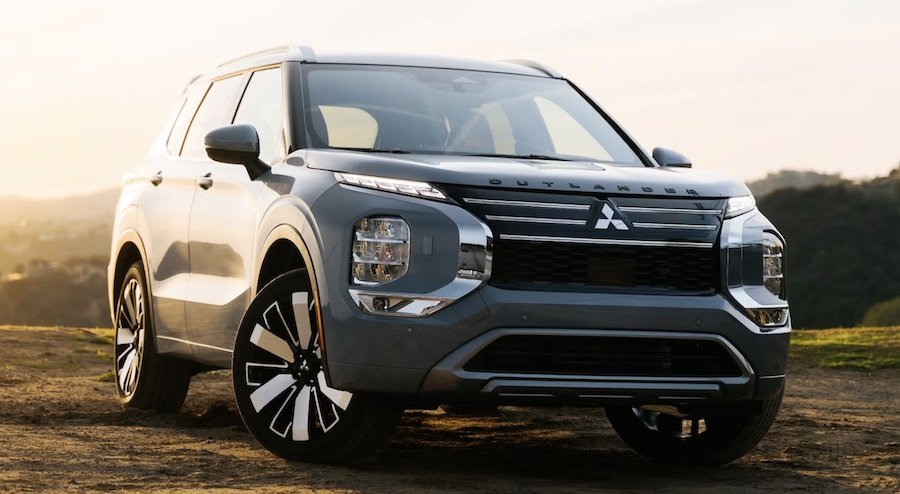
In a recent short statement, Mitsubishi confirmed that its joint venture with Shenyang was terminated owing to, what the Japanese marque calls, “the rapid transformation of China’s automotive industry.”
Established in August 1997, the Shenyang Aerospace Mitsubishi Motors Engine Manufacturing joint-venture (SAME) began operations in 1998, supplying engines not only to the Japanese brand but also to a selection of Chinese automakers. Effective immediately, Shenyang will continue operations, albeit now known as Shenyang Guoqing Power Technology Co., Ltd. and without Mitsubishi as a key shareholder.
Though not officially mentioned in its statement, Mitsubishi’s severance has much to do with the Chinese market’s shift towards electric vehicles and customer loyalty to domestic brands. Guangdong-based companies like BYD, for example, continue to dominate the fast-growing sector with its all-electric lineup, with rumors of the brand even expanding to North America. By contrast, of the three models Mitsubishi sold in China – the Outlander, the ASX, and the Eclipse Cross – the ASX was the only EV.
Consequently, sales for Mitsubishi in China have continued to drop. In Q1 2023, for example, the Japanese marque revealed that total assets of GAC Mitsubishi – another joint venture, this time between the Guangzhou Automobile Group and Mitsubishi – were in the red to the tune of around $196 million. This, despite the fact that, six years on from the venture’s foundation in 2012, GAC Mitsubishi was recording comparatively healthy sales of 144,000 units domestically.
In mid 2023, GAC Mitsubishi looked to swing the balance back in its favor by shutting down operations at its local facility and refurbishing the production line to prioritize its EV brand, Albion. It’s unclear whether this will continue. In the statement, Mitsubishi confirms it has “reassessed its strategy in the region.”
Pajero, a pre-production version of which has recently been spotted testing.
Related News


