Porsche Swears the Cayenne Electric Hides Its Gigantic Weight
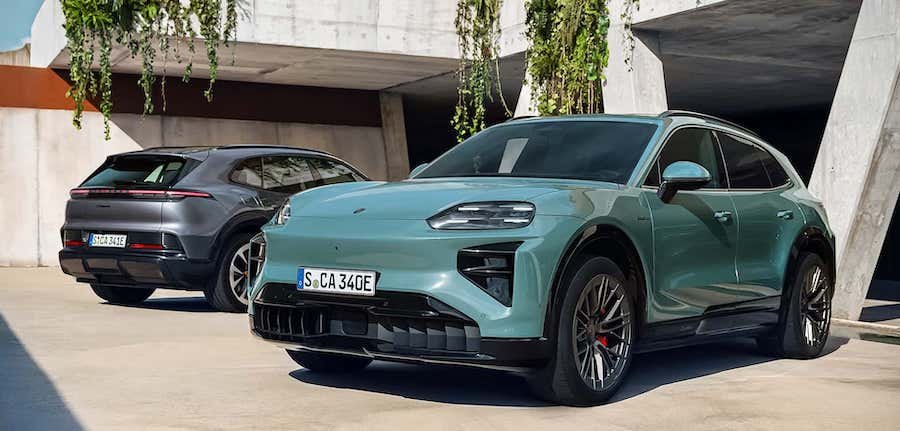
At 5,831 pounds (2,645 kilograms), the Cayenne Electric is Porsche’s heaviest production vehicle ever. As you can imagine, a good chunk of that heft comes from the gargantuan 113-kWh battery, which weighs 1,322 lbs (600 kg) on its own. In its early days, Zuffenhausen had an entire car that weighed nearly as much as the battery: the 1951 356 SL (Sport Light), a Le Mans-winning race car that was only 88 lbs (40 kg) heavier.
But Porsche says you shouldn’t worry about the Cayenne Electric weighing nearly as much as two base Caymans. Michael Schaetzle, Vice President of the Cayenne lineup, told Australian magazine Drive that drivers won’t actually feel the electric SUV’s substantial weight thanks to the battery’s positioning:
'The weight of the battery is very low. It's under the centre of gravity of the car. To be honest, the heavy battery helps the car to perform well and to handle well. We've got new tires, new axles, the Active Ride System. The car feels lighter than the ICE model.'
A Cayenne Turbo with a V-8 isn’t that much lighter. At 5,666 lbs (2,570 kg) for the European model, it’s only 165 lbs (75 kg) lighter than its electric sibling. Both ICE and EV models will peacefully coexist for a long time. Porsche has already promised the V-8 will remain part of the portfolio well into the 2030s, continuing even in Europe, with updates to meet the upcoming Euro 7 standard.
Schaetzle’s analogy didn’t end with the weight comparison, as he also praised the EV’s off-road capabilities. With the instant response of the electric motors and the flexibility to adjust power delivery, the Cayenne Electric is “much better than the ICE” off-road.
Still, it’s unclear how many Cayenne buyers, gas or electric, actually care about leaving the asphalt. The original model had all sorts of off-road hardware, including a low-range transfer case and an optional locking rear differential. Those features were dropped in later generations to cut weight, and we haven’t heard many complaints about the on-road focus since the second generation arrived in 2010.
Porsche is also working on an even larger and potentially heavier electric luxobarge. The three-row SUV, codenamed “K1,” was initially planned as an EV-only model. However, it will debut with combustion engines first, a decision driven by slower-than-expected EV adoption. Outgoing Porsche CEO Oliver Blume said the shift reflects “new market realities and changing customer demands.”
Related News


