Toyota Says Diesel Is Living On Borrowed Time, This Is How Long It Has Left
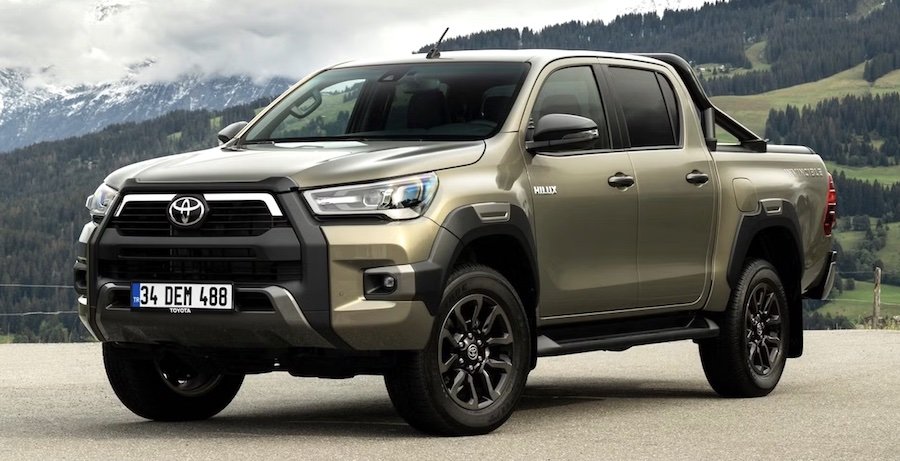
However, the automaker isn’t as enthusiastic when it comes to engines that run on diesel, with one of its executives placing a deadline on the fuel. In a recent interview with CarExpert, Toyota Australia's vice president of sales, marketing, and franchise operations, Sean Hanley, said diesel will remain in use for the next decade, but after that, he expects alternatives to take over.
Gas-Electric Hybrids Taking Over
Hanley was speaking specifically about the Australian market – a region where diesel has traditionally thrived due to long distances and significant mining activity. In other words, if diesel doesn’t have a future in Australia, it’s unlikely to have one anywhere. One of Toyota's best-selling models in Australia is the Hilux midsize pickup truck, which has a predominantly diesel powertrain lineup.
Toyota plans to eventually replace its diesel engines with hybrid powertrains that use gas engines, according to Hanley. Toyota is already focused on hybrid technology for the US market, where the automaker is slowly making it the standard option, most recently with the Toyota Camry sedan. There are no Toyota diesels available in the US, though the automaker’s Hino commercial vehicle subsidiary does offer diesel trucks here.
Instead of a spark plug for ignition, as in gas engines, diesels rely on compression ignition. This results in higher thermal efficiency, enabling diesels to deliver much better mileage. The tradeoff is that diesels produce higher levels of toxins, particularly nitrogen oxides and particulate matter. Their carbon emissions are also higher per unit of fuel burned. These toxins were at the heart of Volkswagen Group's Dieselgate scandal a decade ago, which prompted many automakers to abandon diesel.
Hydrogen Is Also A Solution
Taking a longer-term view, Hanley told CarExpert that hydrogen will play an increasing role, particularly in the commercial vehicle sector. He cited hydrogen as a viable alternative around 2035, and that is what Toyota is preparing for. By then, he predicts, there will be sufficient hydrogen infrastructure to make the fuel both convenient and affordable. Toyota is helping build this infrastructure, such as with its Tri-Gen plant at California's Port of Long Beach, which uses biogas to produce usable water, renewable electricity, and renewable hydrogen.
Toyota is developing both internal-combustion engines that run on hydrogen, as well as hydrogen fuel cells which combine hydrogen with oxygen from the air in a process that results in electricity and water. Fuel cells can either exclusively power a vehicle, as in the Toyota Mirai sedan, or serve as a range extender for a battery-electric car. The latter technology is already being employed in the commercial sector by truck manufacturers such as Daimler, Hyundai, and Volvo. Toyota has also been working with truck manufacturer Kenworth to trial a handful of trucks equipped with fuel cells at the Port of Long Beach.
Nouvelles connexes


